
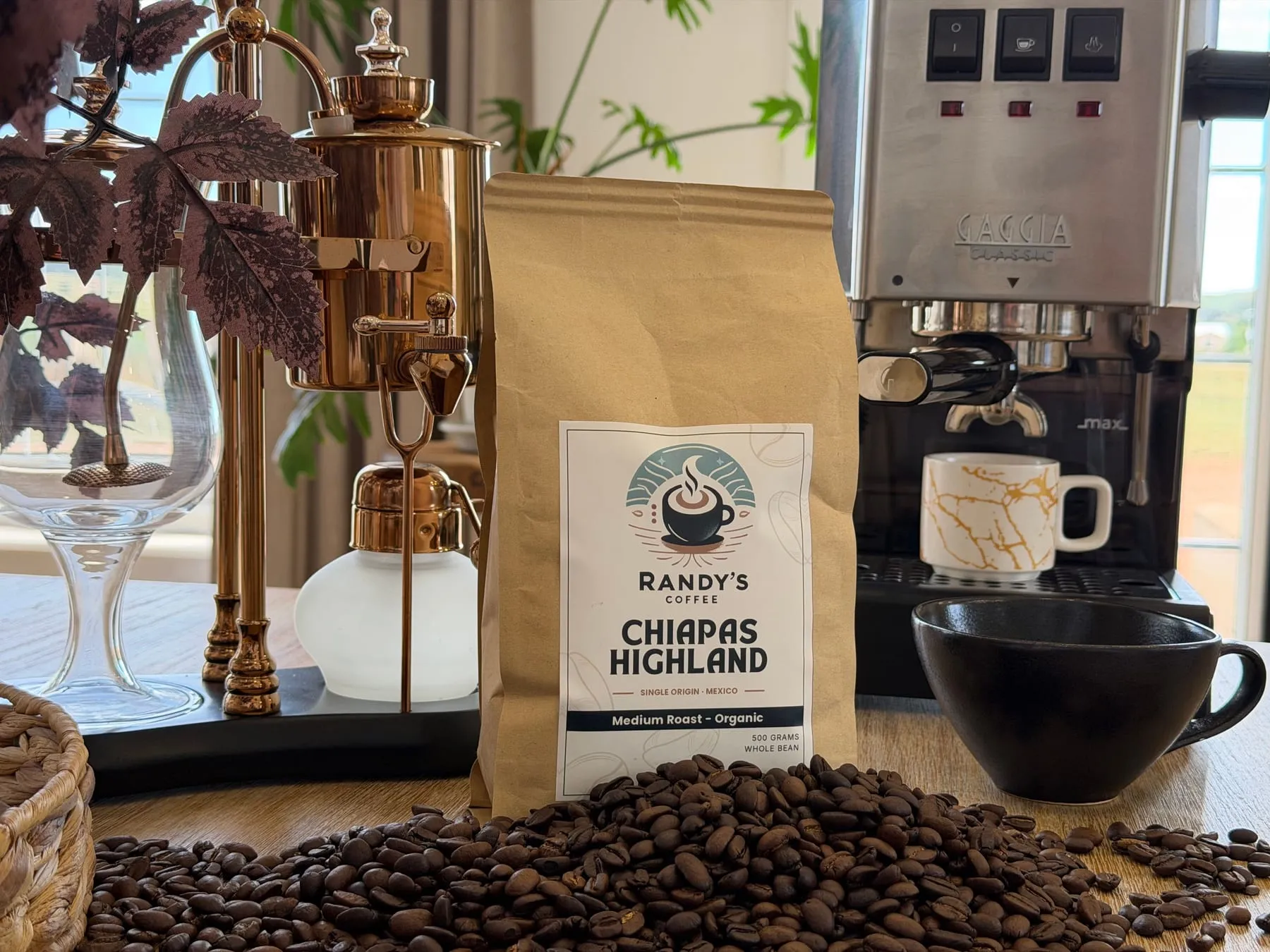
So, cold brew. If you’ve only ever had coffee hot, this one surprises people. It’s not iced coffee — iced coffee is hot coffee poured over ice. Cold brew never sees heat at all. You leave the coffee sitting in cold water for most of a day, and time does the work that hot water normally does in four minutes.
What comes out is smoother and a lot less sharp than hot coffee. The bitterness mostly stays behind, and what you get is round and sweet — especially from a medium roast with chocolate notes, like Chiapas Highland.
And honestly, it’s about the easiest coffee there is to make.
What you need
- A big jar with a lid — a mason jar is perfect
- Coffee, ground coarse (more on that below)
- Cold, filtered water
- Something to strain it: a paper coffee filter, a clean cloth, or a fine sieve
The ratio
Start with 100 grams of coffee to 800 ml of water. That makes a strong concentrate, which is what you want — you’ll dilute it when you pour.
No scale? That’s roughly one cup of coarse-ground coffee to a bit over three cups of water. Close is good enough here; cold brew is forgiving.
How to make it
- Put the coffee in the jar and pour the cold water over it.
- Stir it once so all the grounds get wet, then put the lid on.
- Leave it in the fridge for about 18 hours. On the counter it’s done sooner — 12 to 14 hours is plenty.
- Strain it through your filter or cloth into a clean jar. Take your time here — rushing it pushes the fine bits through.
- To drink it, mix it about half and half with cold water or milk, over ice.
It keeps in the fridge for about a week, so one jar gets you a lot of mornings.
Make it your own
The first batch is a starting point, not a rule. Too strong? Add more water when you pour. Too weak? Use a little more coffee next time, or leave it a couple of hours longer. Once you find where you like it, write it down — you’ll be making this again.
If you bought it ground
That works too. Coffee ground for a regular coffee maker is a bit finer than cold brew wants, so it can come out a little bitter or cloudy. Two easy fixes: take a few hours off the steep, and strain it through a paper filter rather than a sieve. You’ll still get a good jar.
If you grind your own, go coarse — like rough sea salt. There’s a whole post on why that matters, because it’s the one mistake that ruins more cold brew than anything else.